Solutions

Organised by the operational problem, not the feature.

Five places where the equipment behind agriculture depends on knowledge that is usually scattered. For each: the problem, Zirat’s role, a representative workflow, the potential outcome, and what still needs to be validated.

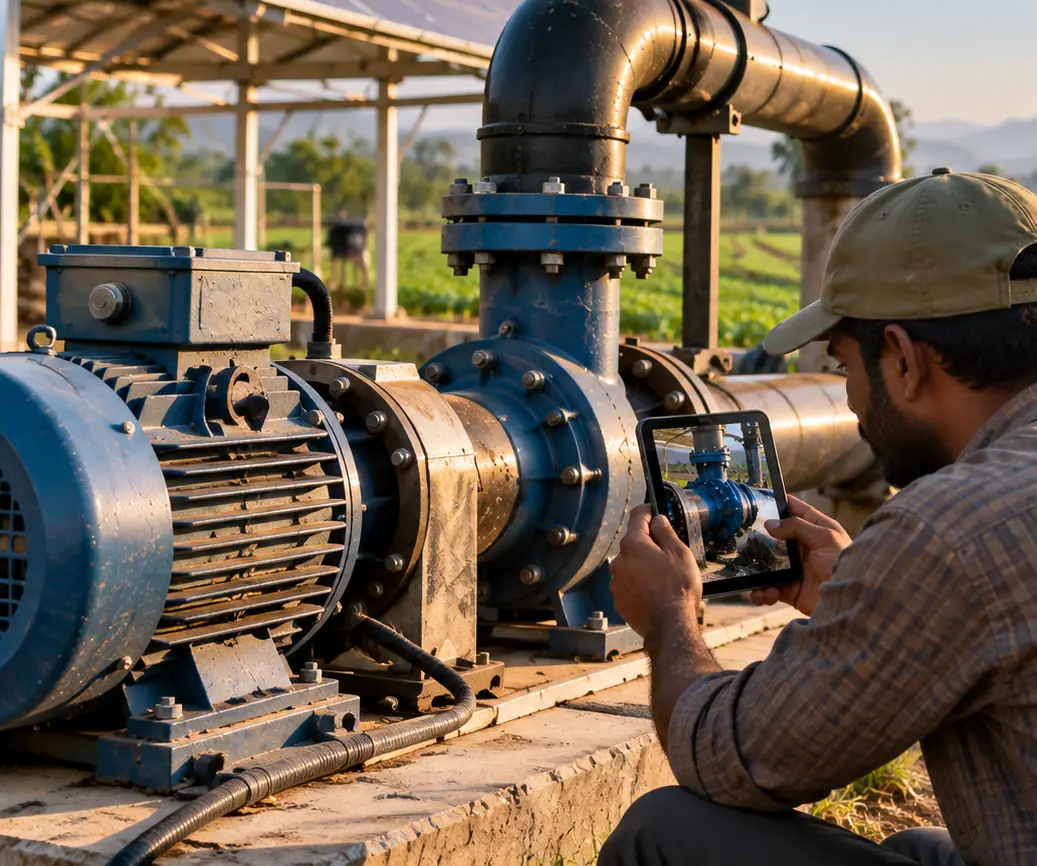
A technician photographing a farm irrigation pump nameplate.Illustrative
01

Irrigation Equipment Intelligence

Connect pump identity, manuals, inspection evidence and service history.

The operational problem
A pump stops during an irrigation window. Its manual, last repair and warranty are in different places, and the person who serviced it is unreachable.
The role of Zirat
Holds the pump’s identity, documents, inspection evidence and history in one record that can be questioned at the pump house.
A representative workflow
  1. Scan or photograph the nameplate
  2. Review linked guide and last service
  3. Capture today’s photos and notes
  4. Ask what to check first
  5. Mechanic decides; outcome recorded
The potential outcome
Faster access to the right information and more informed first checks — potentially fewer repeated diagnoses.
Still requires validation
Time saved, answer accuracy and mechanic trust, measured against a baseline agreed with pilot partners.
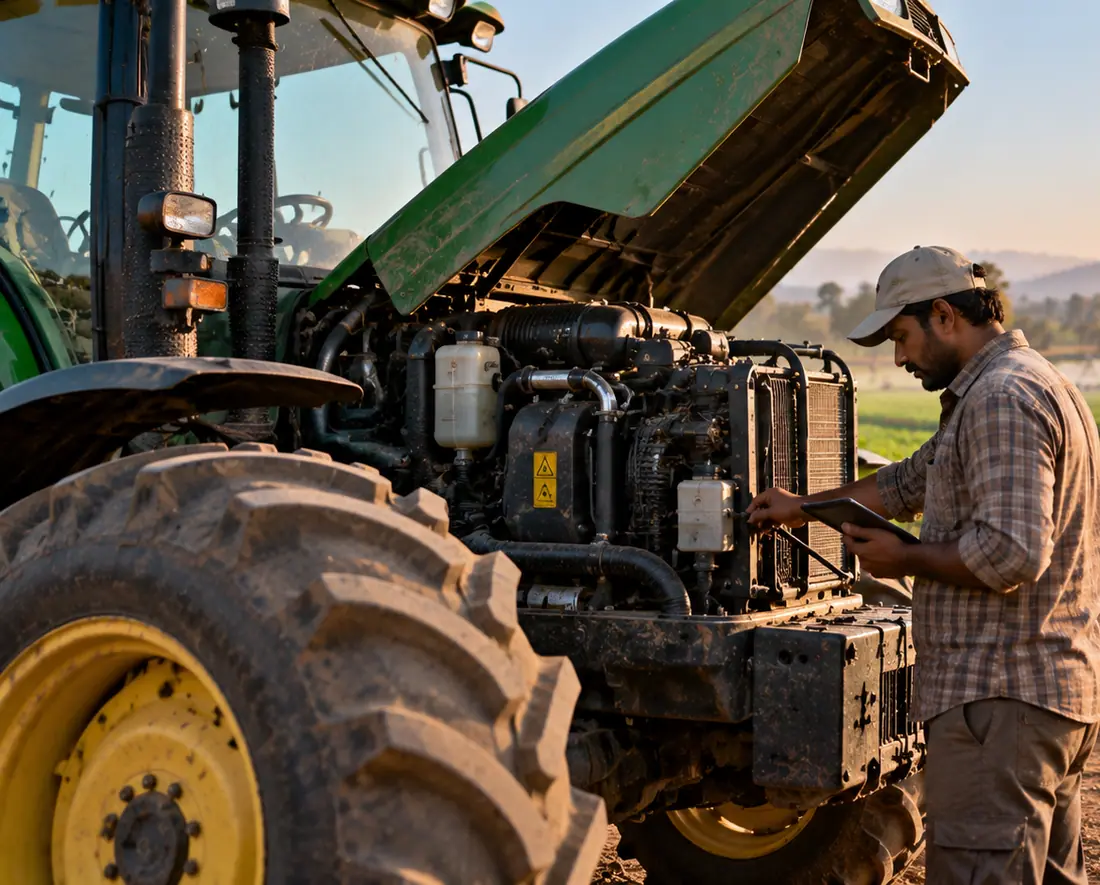
A mechanic inspecting the engine of a tractor in a field at golden hour.Illustrative
02

Farm Machinery Intelligence

Preserve machine-specific technical knowledge and maintenance context.

The operational problem
Tractors, harvesters and implements change hands, operators and workshops. What a machine needs is remembered by people, not kept with the machine.
The role of Zirat
Keeps the machine’s documents, service events and observations together, and carries them through transfer or redeployment.
A representative workflow
  1. Register the machine
  2. Attach manuals and warranty
  3. Log each service and part replaced
  4. Ask before putting it back into use
  5. Record what was done
The potential outcome
A documented machine that survives staff turnover and season changes.
Still requires validation
Whether equipment managers actually keep records current, and whether the history changes service decisions.
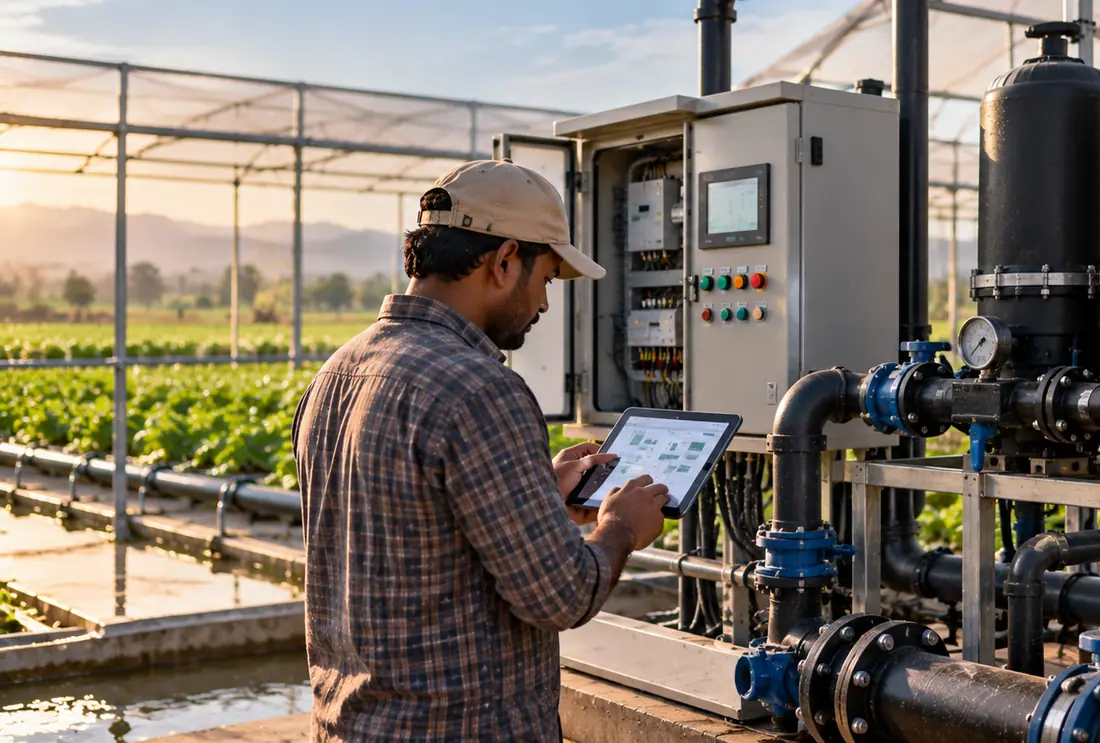
An operator with a tablet beside a greenhouse irrigation filtration and control system.Illustrative
03

Greenhouse and Polyhouse Infrastructure

Create connected equipment context around pumps, controllers, cooling and other infrastructure.

The operational problem
A protected-cultivation site depends on filtration, fertigation, controllers, fans and pumps from several suppliers, each with its own documents.
The role of Zirat
Gives each piece of equipment its own record, and lets a site-level view show which assets have gaps in their documentation or evidence.
A representative workflow
  1. Register the controller, pumps and fans
  2. Link each supplier’s documents
  3. Capture inspection evidence
  4. Review gaps across the site
  5. Decide and record
The potential outcome
Better continuity across suppliers and contractors; clearer visibility of undocumented equipment.
Still requires validation
Fit with real polyhouse and drip-irrigation workflows — a proposed focus for the first pilot.
Illustrative
04

Cold Storage and Agricultural Infrastructure

Preserve information about critical equipment that supports agricultural storage and operations.

The operational problem
Compressors, generators, cooling units and electrical infrastructure run continuously, and their failure windows are costly.
The role of Zirat
Preserves identity, specifications, service history and evidence for equipment that must keep running — with alerts for documentation or service gaps as a specified capability.
A representative workflow
  1. Register compressors, generators and panels
  2. Attach specifications and service plans
  3. Record inspections
  4. Investigate an anomaly against history
  5. Escalate to a qualified provider when needed
The potential outcome
More consistent maintenance records and faster hand-over between technicians.
Still requires validation
Whether operators of storage facilities value this workflow — not yet tested with any operator.
Two technicians inspecting irrigation valves and pipework.Illustrative
05

Service and Maintenance Knowledge

Help operators and mechanics retrieve the information needed to investigate equipment issues.

The operational problem
A mechanic visiting a machine they did not install starts without its history, or the right manual revision.
The role of Zirat
Gives a visiting mechanic or dealer scoped, read-only access to the records relevant to an engagement — and a place to record what they found.
A representative workflow
  1. Scan the machine
  2. See identity, documents, history
  3. Capture findings
  4. Draft a report for human review
  5. Leave the record better than found
The potential outcome
Continuity of service knowledge across providers.
Still requires validation
Dealer and mechanic willingness to read from and write to a shared machine record.
Talk to Zirat

Tell us which equipment your operation cannot afford to lose track of.