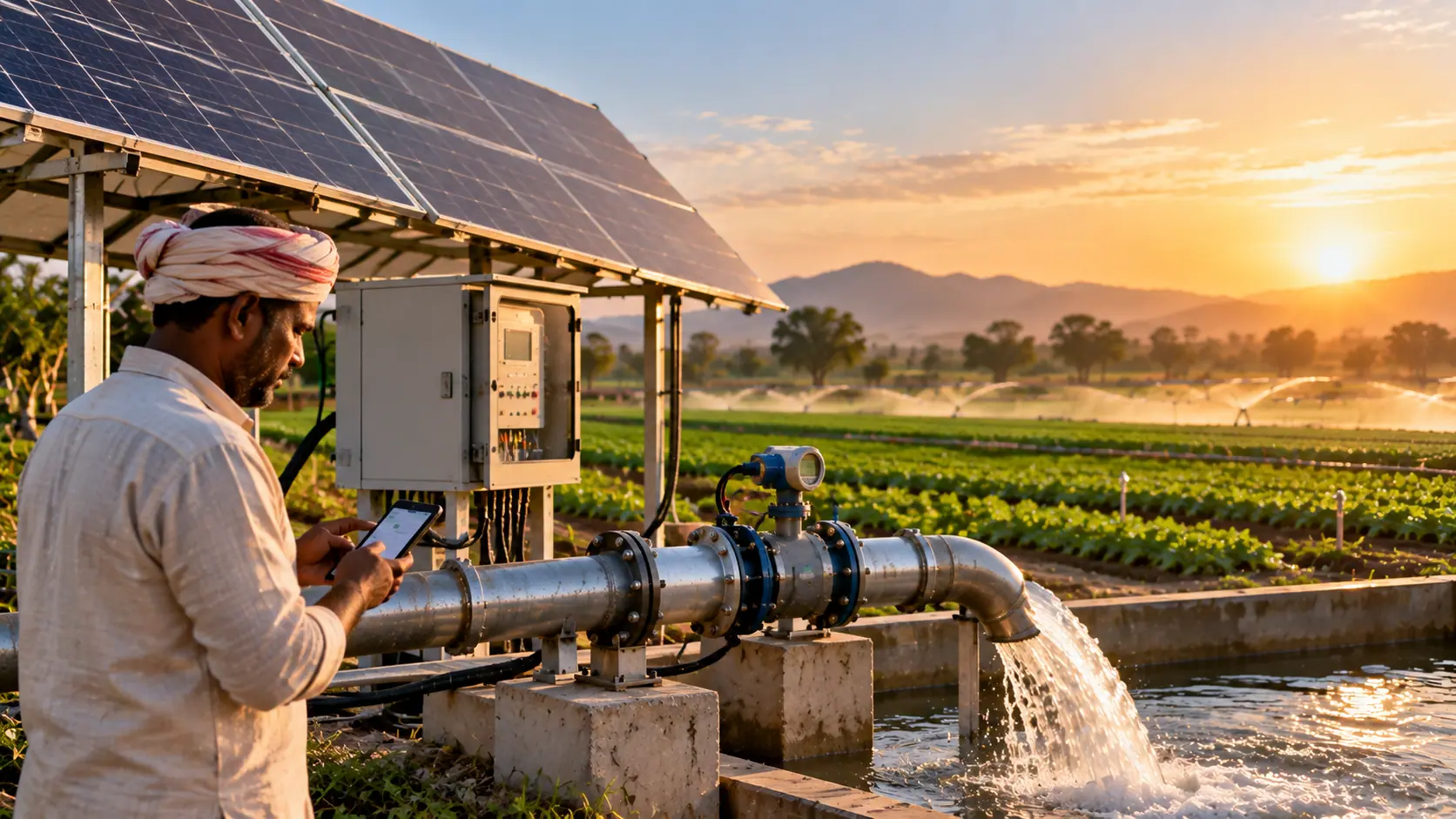
The infrastructure behind more resource-aware agriculture.
Agricultural equipment supports irrigation, cooling and storage. Zirat aims to improve the knowledge and maintenance decisions around that equipment. Whether this contributes to more efficient use of water and energy must be measured in the field.
Missing information turns into operational uncertainty.
When equipment knowledge is scattered, a fault takes longer to understand, a repair may repeat, and a pump may run in poor condition or not run when it is needed.
- 1Equipment information is fragmented
- 2Faults take longer to investigate
- 3Maintenance is delayed or repeated
- 4Avoidable downtime and inefficient operation
- 5Uncertainty at critical agricultural moments
From fragmented information to a possible resource benefit.
The first four steps are Zirat’s intended function. The last two are a hypothesis to be tested — they depend on real-world use.
- Fragmented equipment informationManuals, bills and advice held in different placesProduct function
- Better asset contextOne connected record per machineProduct function
- More informed investigationQuestions answered from the machine’s own evidenceProduct function
- Timely maintenance decisionsMade by people, with better informationProduct function
- Potentially more reliable equipmentSubject to real-world useHypothesis
- Potential water and energy benefitsTo be measured, not assumedHypothesis
Climate outcomes to be validated through field pilots. No verified Zirat impact measurements exist today.
Five possible contributions to climate-smart agriculture.
Each is a potential benefit or a design intent — none is a measured result.
Uptime
Fewer avoidable breakdownsService history and manuals close at hand may help operators catch issues earlier and act faster.
Not yet measuredWater and energy
Efficient pumps and irrigationKeeping pumps, controllers and cooling equipment in good order is a plausible route to less wasted water and power.
Hypothesis for pilotsKnowledge that stays
A record that outlasts the personEquipment history preserved across operators, seasons and changes of ownership.
Design intentTrust
Answers with sourcesEach answer links to the manual, photograph or record behind it, and says what is observed and what is inferred.
Design intentTo explore later
A wider ecosystemPotentially connecting dealers, service providers and financiers to the same verified equipment record.
Outside a first pilotWhere equipment condition meets resource use.
Pumps and irrigation
Pumps move the water. A pump running inefficiently, or one that fails during a critical window, affects when and how much water is used.
Controllers and drip systems
Controllers and filtration decide timing and pressure. Their settings, documentation and condition are rarely kept with the equipment.
Cooling and cold storage
Compressors and cooling units run for long hours. Their upkeep bears on energy use and on keeping produce saleable.
Generators and solar equipment
Where grid power is unreliable, generators and solar-powered equipment carry irrigation and storage.
What is, what may be, and what we still need to learn.
Asset intelligence and evidence-grounded investigation
Connecting identity, knowledge, evidence and history around each machine, so people can investigate and decide with better information.
Improved equipment reliability and resource efficiency
Subject to validation. It depends on the equipment, how it is used and what decisions follow.
Which workflows, which conditions, how much?
Which equipment workflows produce measurable resource benefits? Under which operating conditions? How much can be attributed to Zirat?
What we propose to measure with pilot partners.
A framework to agree, not a set of results.
Time to find the right equipment information
How long it takes to locate the manual, specification or history that applies to this machine.
Time to investigate a fault
From first observation to a documented next step, against the partner’s own baseline.
Share of answers linked to a source
How often a recommendation can be traced to a specific document, record or observation.
Farmer and mechanic confidence
Structured feedback on whether the record and its answers were trusted and useful.
Usability in low-bandwidth conditions
Whether capture and retrieval work where connectivity is intermittent.
Downtime or resource impact
Only where a reliable baseline exists and the effect can be attributed responsibly.
Baselines are agreed with pilot partners first. Improvements are measured, not assumed.
- 01Baselines firstWe agree what “before” looks like with each pilot partner before anything is measured.
- 02Measured, not assumedAn improvement is reported only where it was measured against that baseline.
- 03Attribution with careResource effects have many causes. We report what can responsibly be attributed to better equipment decisions, and what cannot.
- 04No impact countersThis site shows no water-saved, energy-saved or emissions figures, because none has been verified.
- 05Methods and limits publishedAny result is accompanied by how it was measured and what it does not show.
Where Zirat’s climate case stands today.
- ConceptCategory and boundary defined
- SpecificationProduct requirements and specification writtenWe are here
- Pilot designScope, partners and baselines agreed
- Field validationUsed by real operators on real equipment
- Measured outcomesResults published with methods and limits